
Acres, lots and pads
Subdivision & Commercial Hydroseeding in Houston, TX
Seed and mulch on your schedule for builders and site crews with bare, disturbed ground to stabilize.
- On-site measuring and a written, itemized quote at no charge
- Grading, silt fence and seeding handled by one crew
- Seed mixes picked for your sun, shade and soil
Covering Ground Across a Growing Metro
Subdivision and commercial hydroseeding is the large-area side of our work around Houston. Builders call us to seed lot backs, common areas and street rights-of-way as phases finish. Site contractors call when a pad, a detention basin or a pipeline crossing has to be stabilized before they can leave. Property managers call when a retail or industrial site has acres of bare ground left after construction. Among the hydroseeding contractors working this market, what we offer is simple: one crew that can grade, install sediment controls and spray, scheduled around your phases instead of a single big visit at the end.
Why so much ground is bare at once
Houston keeps spreading onto former prairie, rice fields and pasture. Flat terrain and extensive greenfield development have combined to worsen flooding, as Wikipedia puts it, and every new phase opens up acres of clay that the next heavy rain can move. Harris County cannot direct where developers build through zoning; under Texas law it can only apply floodplain rules during subdivision and permit approval. In practice that means lots of active sites across the county at any time, many draining into the same bayous.
The permit side
A project that disturbs an acre or more and drains to surface water in the state is regulated under the TCEQ Construction General Permit, TXR150000. Acreage is totaled across a larger common plan of development. TCEQ's own example is a subdivision where one company grades 0.75 acres, another clears 4 and a third excavates 0.5: at 5.25 acres combined, every operator falls under the rules for 5 or more acres. Each operator needs a Stormwater Pollution Prevention Plan in place before any dirt is moved, and those plans usually name seeding or hydromulch as the way disturbed areas get stabilized. When the work wraps up, operators file a Notice of Termination through TCEQ's online system. Our hydroseed is often the last task on the list before that.
Seeding by phase
We can seed in sections as lots are finished rather than waiting for a whole phase. That keeps bare ground to a minimum during the wet months: NOAA's normals at Bush Intercontinental show May, June, September and October each averaging close to 5 inches of rain or more. For areas that will be disturbed again, we can apply hydromulch with a temporary cover crop to hold soil until final grading. For permanent cover, bermuda is the usual choice in sun. On basin bottoms, easements and open space, native coastal prairie grasses such as little bluestem, big bluestem, Indiangrass and switchgrass are an option that fits the land's original vegetation.
Detention basins and channels
Many new Houston developments route runoff to detention. Wikipedia describes one, a 900-home project planned on a former golf course in the 500-year floodplain, which needed a channel to carry stormwater to detention basins. Basin side slopes and channel banks are where seed fails first, because water runs along them. We put heavier mulch rates or bonded fiber on those surfaces and can pair seeding with blankets on the steepest sections. That work is described in more detail on our erosion control page.
Per-acre pricing and what moves it
Published per-acre figures vary a lot. For an acre, LawnStarter gives $2,136 to $4,897, and Fixr gives $2,000 to $4,000. In a 2023 public bid for tornado-recovery hydroseeding in North Little Rock, Arkansas, the two bids per acre were $2,595 and $3,325. Water access is a big factor on a commercial job: a hydroseeder holds a set volume, and how far the truck travels to refill changes how much ground we cover per day. Access for the truck, the seed mix, mulch rate, fertilizer and lime, and how many mobilizations the phasing needs also affect the price.
What we need from you
A site plan or SWP3 map showing the areas to seed, the phasing, any seed mix your specs call out, where we can draw water, and who is the contact on site. If you are comparing hydroseeding companies, send the same scope to each so the quotes line up. We give a written, itemized quote for the acres you show us, and for multi-phase sites we can price each mobilization.
Commercial Work We Take On
Common requests from builders, site contractors and owners.
Subdivision lots and common areas
Lot backs, side yards, parkways and amenity grounds as phases finish.
Detention basins
Side slopes, bottoms and maintenance berms seeded with mulch sized for moving water.
Commercial and industrial pads
Open ground around retail, warehouse and plant sites.
Rights-of-way and easements
Street edges, pipeline and utility corridors.
Temporary stabilization
Hydromulch with a quick cover crop on areas that will be disturbed again.
Native and spec mixes
Coastal prairie grasses or the mix your plans require.
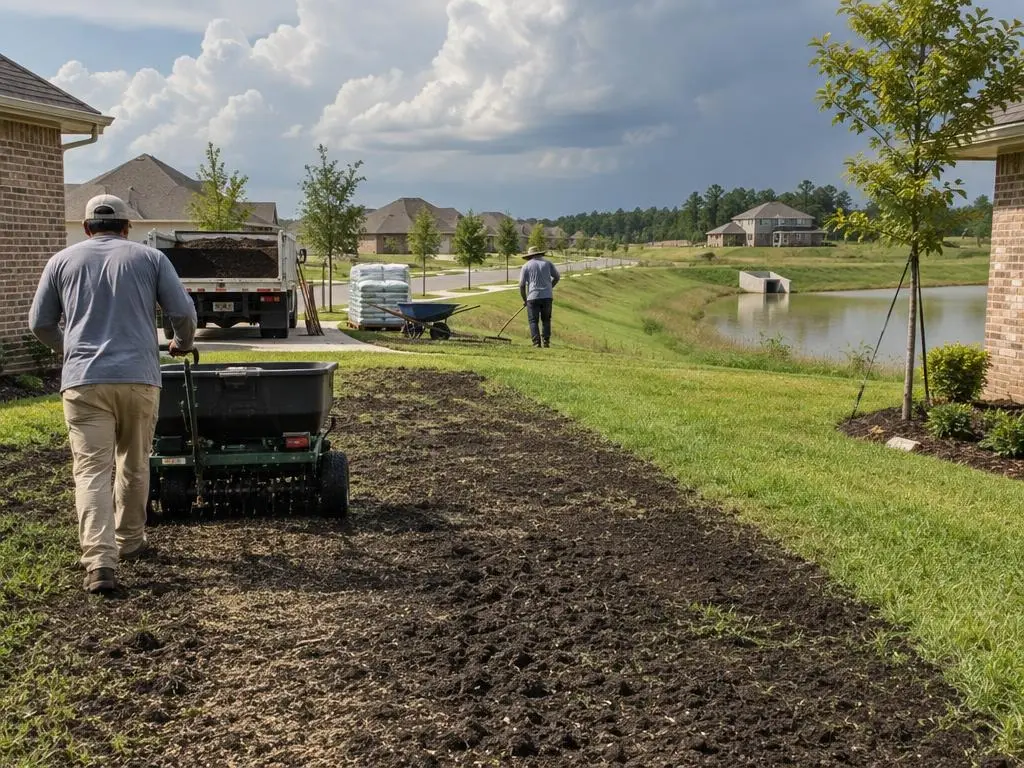
Published Per-Acre Hydroseeding Figures
| Source and scope | Published figure |
|---|---|
| Large-area hydroseeding per acre (LawnStarter) | $2,136 to $4,897 |
| Per-acre range (Fixr) | $2,000 to $4,000 |
| One acre, residential-scale guide (HomeAdvisor) | $2,600 to $8,700 |
| 2023 municipal bid, North Little Rock, AR, two bidders | $2,595 and $3,325 per acre |
Water supply, the number of trips to site, seed mix and mulch rate shift commercial prices more than raw acreage. We price from your site plan, and the signed proposal is the amount invoiced.
How a Site Gets Seeded
1. Scope review
We go over the site plan, SWP3 map, phasing and specified mix.
2. Site walk
Access, water source and slopes checked in person.
3. Quote by area or phase
Itemized pricing for each mobilization.
4. Seed and mulch
Areas sprayed as they become ready, heavier on slopes and basins.
5. Touch-up
Washed or thin areas reseeded before you close out.
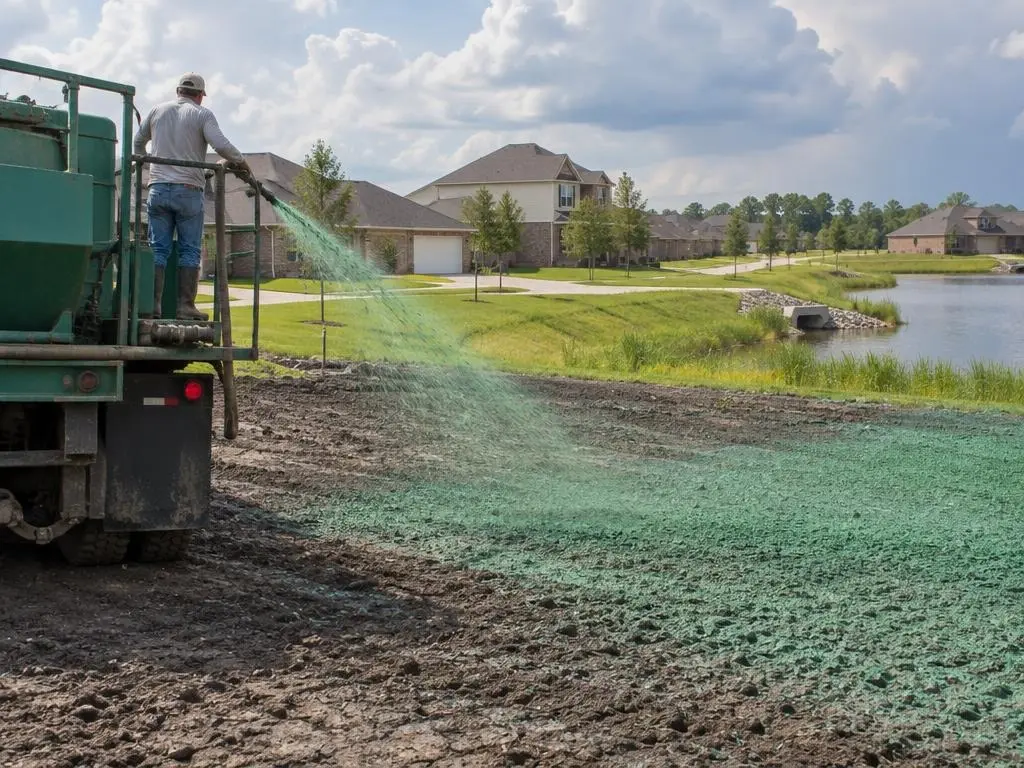
Why Choose Us for Subdivision & Commercial Hydroseeding
Seed by phase
We come back as sections finish instead of leaving acres bare until the end.
Sediment controls too
Silt fence and inlet protection come from the same crew.
Native mixes available
Coastal prairie grasses for basins and open space.
Subdivision & Commercial Hydroseeding Questions
Do you work as a subcontractor to builders and site contractors?
Yes. The bulk of our commercial seeding is done under the builder or site contractor who holds the job. We work from your plans, schedule and SWP3.
Can you seed a detention basin that holds water after rain?
We seed side slopes and bottoms once they are dry enough to work, and we use heavier mulch or bonded fiber where water moves. Areas that stay wet most of the year may need a different approach, which we will discuss at the site walk.
How many acres can you cover in a day?
It depends mostly on how far the truck travels to refill with water, plus access and mulch rate. A close hydrant or pond makes a big difference. We give a schedule once we have seen the site.
Will hydroseed satisfy our stormwater plan's stabilization requirement?
Seeding with hydromulch is a common stabilization method in SWP3s, but your plan and permit set the standard. We apply what the plan calls for and touch up areas until coverage is established.
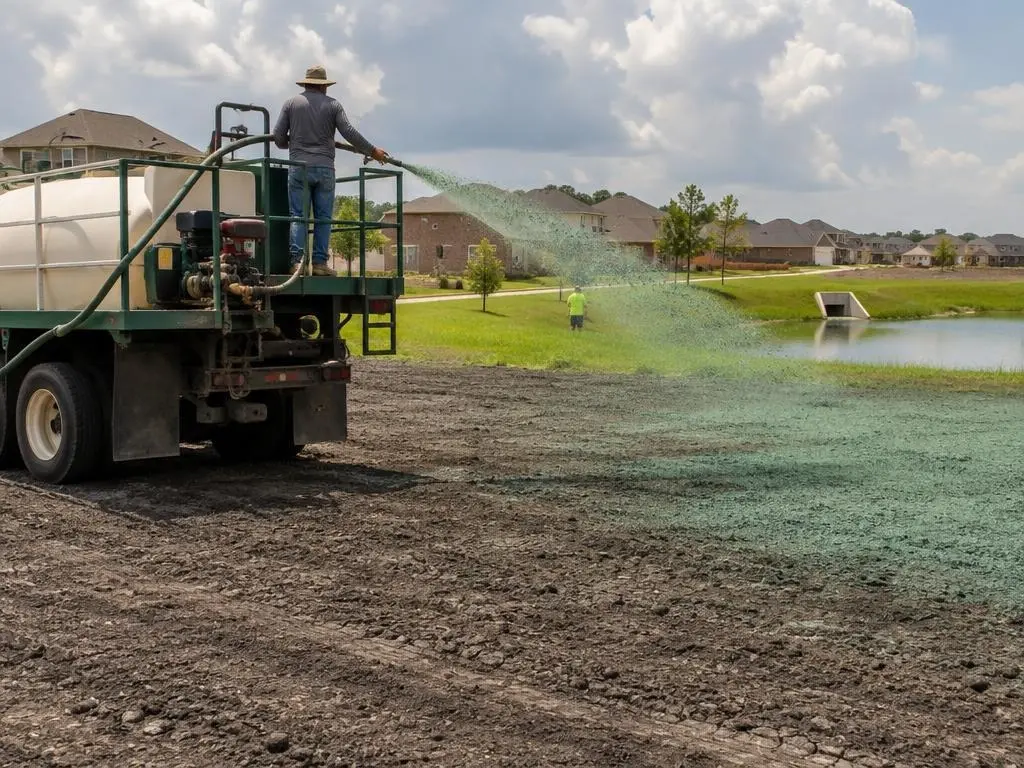
Subdivision & Commercial Hydroseeding Service Areas
- Hydroseeding in Houston, TX
- Hydroseeding in Katy, TX
- Hydroseeding in Sugar Land, TX
- Hydroseeding in The Woodlands, TX
- Hydroseeding in Conroe, TX
- Hydroseeding in Pearland, TX
- Hydroseeding in League City, TX
- Hydroseeding in Friendswood, TX
- Hydroseeding in Missouri City, TX
- Hydroseeding in Cypress, TX
- Hydroseeding in Tomball, TX
- Hydroseeding in Humble, TX
- Hydroseeding in Kingwood, TX
- Hydroseeding in Spring, TX
- Hydroseeding in Baytown, TX
- Hydroseeding in Pasadena, TX
- Hydroseeding in La Porte, TX
- Hydroseeding in Richmond, TX
- Hydroseeding in Fulshear, TX
- Hydroseeding in Manvel, TX
- Hydroseeding in Alvin, TX
- Hydroseeding in Magnolia, TX
- Hydroseeding in Montgomery, TX
- Hydroseeding in Dickinson, TX
Get a Subdivision & Commercial Hydroseeding Estimate
Send the site plan and phasing. We will walk it and price each area.